
"middle species"
2000 article(s) found

The difference between Arabica and robusta coffee Arabica caffeine content is lower?
Professional coffee knowledge exchange more coffee bean information please follow the coffee workshop (Wechat official account cafe_style) Arabica Arabica vs Robusta Arabica coffee and Robasta coffee: coffee beans are seeds of plants belonging to the Rubiaceae Family family, under which there are at least 25 major varieties of coffee (Coffea Genus)

What are the four types of coffee trees, coffee trees and their characteristics
The shape of Arabica bean is small, the front is long oval, the middle crack is narrow and tortuous, and the arc on the back of the bean is flat. Arabica coffee is grown in Brazil and Colombia in South America, Central America, Costa Rica in the Caribbean, Guatemala, Jamaica, Mexico and Ethiopia. Arabica coffee beans are large, uniform in size and color.

What are the smaller coffee beans? is it sweetened to drink coffee?
1. Arabica grows Arabica beans, and the world-famous Blue Mountain Coffee and Mocha Coffee are almost all Arabica varieties. Shape: the shape of the bean is small, the front is long oval, the middle crack is narrow and tortuous, and the arc on the back of the bean is flat, uniform in size and shiny in color. Origin: Arabica coffee is grown in Brazil, Colombia and Central America in South America.

Sidamo producing area of Ethiopia | Bansa Cooperative Red Cherry Plan to mix local native species in the sun
Professional coffee knowledge exchange more coffee bean information please follow the coffee workshop (Wechat official account cafe_style) Ethiopia Sidamo producing area | Bansha Cooperative Red Cherry Plan Sun mixed local native species flavor? The coffee flavor of Sidamo is very diverse, and different kinds of soil, microclimate and countless native coffee species have created the coffee produced in every town.

What is the most famous coffee variety in Ethiopia? a brief introduction to the type and flavor of Ethiopian coffee
Professional coffee knowledge exchange more coffee bean information please follow the coffee workshop (Wechat official account cafe_style) Qianjiaxiefi Red Cherry varieties, Ethiopian Coffee varieties introduction in the coffee industry, the term native species is applicable to varieties introduced in South America and Asia more than a century ago, as well as to many coffee varieties in Africa, especially coffee from Ethiopia
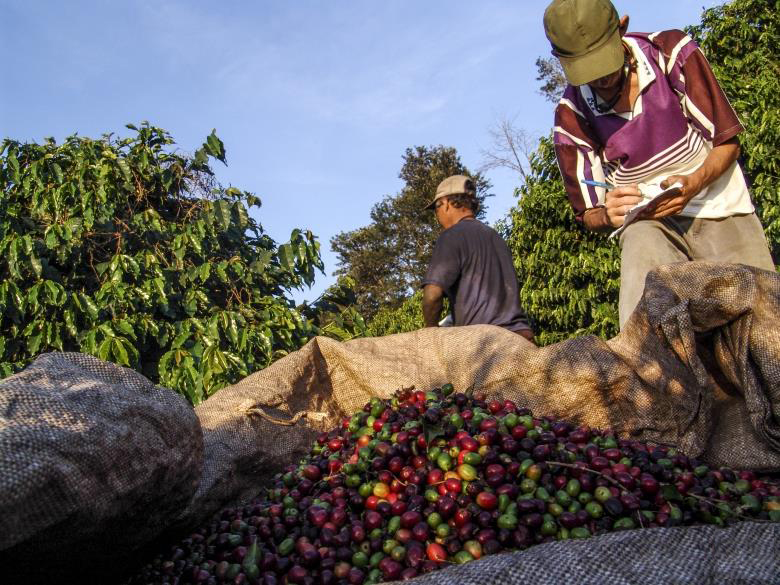
There are 60 coffee producing countries in the world! Northerly to Nepal, southernmost to Paraguay
Professional coffee knowledge exchange more coffee bean information please follow the coffee workshop (Wechat official account cafe_style) you should know the coffee story the vast majority of coffee producing countries are in the Tropic of Cancer and Tropic of Cancer, there are now about 60 countries; Arabica seed and Robusta seed are produced in 2 major varieties. Article = Chengmeitang Publishing editorial Department 60 coffee producing countries, mainly planted

A comparison between Arabica and Robasta
Coffee beans are the seeds of Rubiaceae Family plants. There are at least 25 main varieties of Coffea Genus, among which the two most important varieties are Arabica species Coffea arabica (Arabica coffee) and Canafora species Coffea canephora (Robusta coffee), also known as Robasta Coffee. Ah

Two major coffee trees, Arabica and Robusta.
At present, the most important coffee trees in the world are Arabica and Robusta. These two kinds of coffee trees are the two original species of coffee trees, and the quality of coffee beans produced by these two kinds of coffee trees is also better than that of other coffee trees. Arabica coffee tree. The Arabica coffee tree, which originated from Ethiopia in East Africa, accounts for 70% of the world's coffee bean production; the world-famous Blue Mountain Coffee.

What is the history or origin of Blue Mountain Coffee?
The shape of Arabica bean is small, the front is long oval, the middle crack is narrow and tortuous, and the arc on the back of the bean is flat. Arabica coffee is grown in Brazil and Colombia in South America, Central America, Costa Rica in the Caribbean, Guatemala, Jamaica, Mexico and Ethiopia. Arabica coffee beans are large, uniform in size and color.

Arabica Coffee, the most important kind of coffee in the world, okay?
Professional coffee knowledge exchange for more information about coffee beans, please follow the coffee workshop (Wechat official account cafe_style) Arabica species (scientific name CoffeeArabica). The origin of Arabica species is Ethiopia's Abyssinia Plateau (present-day Ethiopian Plateau). In the early days, it was mainly used as medicine to eat, and developed the habit of baking and drinking in the 13th century.

Comparison of parameters between Arabica Coffee and Robasta Coffee
Coffee beans are the seeds of Rubiaceae Family plants. There are at least 25 main varieties of Coffea Genus, among which the two most important varieties are Arabica species Coffea arabica (Arabica coffee) and Canafora species Coffea canephora (Robusta coffee), also known as Robasta Coffee. Ah
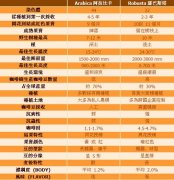
Coffee Variety Comparison Arabica and Robasta Coffee Parameters Comparison
Coffee beans are seeds belonging to the Rubiaceae family, under which there are at least 25 main varieties of Coffee Genus, of which the two most important varieties are Arabica species Coffee arabica (Arabica coffee) and Canafora species Coffee canephora (Robusta coffee), also known as "Robasta coffee". ah

Introduction of Tanzania Coffee varieties Bourbon Coffee Kilimanjaro
Tanzanian coffee has the excellent pedigree of the Middle Eastern non-washed bean family, bright acidity, rich and irritating flavor. There is no doubt that Kenyan coffee takes the lead in this family, but Tanzania has many advantages that are very similar to those of Kenya. Round beans are often specially selected and expensive, but sometimes they taste hairy.

Limjilo, from the coffee producing area of Ethiopia, introduces what is the flavor of Lime coffee?
For more information on coffee beans, please follow the coffee workshop (official Wechat account cafe_style). When talking about several large producing areas in Ethiopia, you are familiar with nothing more than Harrar in the east, Sidamo in the middle, Djimmah in the west, and Yirgacheffe, Lekempti, Kaffa.

A brief introduction to the Market Price of Robusta Coffee Bean varieties
Its caffeine content is much higher than that of Arabica species, which is about 3.2%. Arabica coffee beans grow at colder high elevations in the tropics, which is not suitable for Arabica species. Robustadow is grown in lowlands 200-600m above sea level. He prefers a warm climate and requires a temperature of 2429 ℃ for rainfall.

Guji producing area of Ethiopia | Solar treatment of native species of Dasaya Tasha / Zifengling G1
Professional coffee knowledge exchange more coffee bean information please follow the coffee workshop (Wechat official account cafe_style) Ethiopia Guji producing area | Solar treatment Dasaya Tasha / Zifengling G1 native species flavor? The original text of Dasaya in Ethiopia is Dawala Samayawi, which means purple wind chimes! The bean, like its name, is constantly reminiscent of purple when drinking.
Basic information on coffee
[scientific name] the small grain species is Coffea arabica L., the medium grain species is Coffea canephora, the large grain species is Coffea liberica, which is also called Arabian species, the medium seed species is also called Gaffra species, and the large grain species are also called Liberian species. There are two common species: Arabica and Robusta. Rubiaceae (Rubiaceae), coffee genus (Coffea) [at home and abroad]

Difference between Ugandan robusta coffee beans and Arabica beans _ classification of Ugandan coffee beans
Professional coffee knowledge exchange more coffee bean information please pay attention to the coffee workshop (Wechat official account cafe_style) "Arabica" vs. "Robsta" Arabica v.s Arabica beans are longer and oval in the middle of the split line narrow and tortuous. Romstadou is more circular in the middle of the split line crack into a straight line. Robustas Romsta coffee c

Cultivation techniques and Biological habits of Coffee Tree
2. Biological habits (1) Botanical characteristics (2) growth and flowering habits (3) requirements for environmental conditions (1) Botanical characteristics 1. Root coffee root is a conic root system, its morphology, distribution and depth vary with agro-technical measures, soil conditions and varieties. In the case of a political party, there is a thick and short main root and many developed lateral roots. According to the observation in Hainan Island
Types and varieties of coffee
Coffee is a plant of the genus Coffea genus of Rubiaceae. According to the study of Chevalier,1947, there are 66 species in four groups, including 24 species in Eucoffea group, 18 species in Mascarocoffea group, 13 species in Paracoffea group and 11 species in Argocoffea group.